Popular Posts

Showing posts with label vatican. Show all posts

Saturday, August 08, 2009

THE GREATEST HOAX


THE GREATEST HOAX
…Deception and lies

The greatest hoax perpetuated on humanity has created wars, murders, subterfuge and an enslavement of a large majority of the masses. Being a retired minister of Divine Science, I have studied the Bible and have also done extensive research. What I have learned is astounding and shocking. There will be those who will describe me as a charlatan perhaps; however, the information is more real than what is in our 'so-called' biblical scholars who continue to base their information on recycled ignorance.

In May 2008 the staff of Rene Barnett and Bruce Burgess, producer and director of the documentary Bloodline, contacted me and asked me to interview them on the Blog Talk radio show I had at the time, and sent me a video of their documentary. This was a most interesting documentary and I highly recommend it. This interview is archived on my inactive radio show. The primary man in the documentary is Ben Hammott, who became enamored with the Church of Mary Magdalene at Rennes-le-Chateau and the priest Saunière from viewing a BBC documentary regarding this subject. He set about deciphering the clues that Saunière left in the church and discovered a tomb. Step-by-step the viewer is shown Hammott's journey of a great discovery.

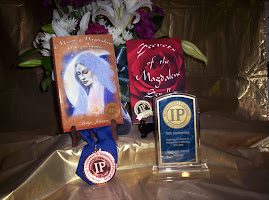
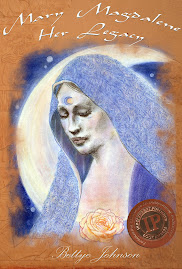
Having researched Rennes le Chateau extensively when I was writing my books Secrets of the Magdalene Scrolls and Mary Magdalene, Her Legacy, I was well aware of the vast number of treasure seekers and read numerous books on this as well as the Knights Templar and Mary Magdalene. I visited Rennes le Chateau and the Languedoc region in 2001 and returned home with a desire to know more. I knew there had to be more than what was known at the time. I pondered why a figure of a demon or devil called Asmodeus was at the entrance of the church and why there was a sign over the church entrance stating Terribilis est locus iste and generally translated as This place is terrible.

Even though there have been many interpretations of the paintings and decorations of this church, none of the researchers gave what I call a valid translation or found Saunière's treasure. Ben Hammott had a dedicated tenacity to search and find the secret. This led him to the discovery of bottles containing these clues, which he had to decipher. In his book, Lost Tomb of the Knights Templar: A Tomb; A Treasure; A Great Secret, Hammott deciphered the clues Saunière had left in the bottles. On page 316 of Hammott's book begins the deciphered statements of Saunière.

Saunière found a tomb with a mummified body covered by a tattered shroud with the Knights Templar symbol of a red cross. Saunière realized that this was the body of Jesus Christ from the crucifixion marks on the body. He realized that the Catholic Church knew the story and that Christianity was based on a lie. This is explosive information.

Hammott writes that Saunière decided to preserve his information and thus we have a renovated church created by Saunière with his clues for future seekers. Hammott's discovery of another message is apparently documents of the Knights Templar giving information that they discovered the body of Jesus under the Temple in Jerusalem and brought it back to France (Gaul) and reburied in this tomb.

Ben Hammott discovered a tomb, however the mummified corpse in it was not covered by a tattered shroud, but a seemingly intact shroud. This body has no crucifixion scars. Are there two tombs? Is one of Jesus and the second the body of Mary Magdalene? Ah mystery! In the tomb, Hammott found a possibly anointing jar and a cup that could be the wedding cup of Mary Magdalene and Jesus.

If this is so, then it does indicate the duplicity of the Vatican—the cover-up and lies over the centuries. I now perceive that the demon Asmodeus represents the Catholic Church and the phrase This place is terrible refers to religion.

Ben Hammott's book of 680 pages is never boring. Writing with humor and with photos, he has documented his journey of discovery and the DNA testing of the body in addition to the artifacts found in the tomb. From Andre Douzet's book Saunière's Model andd the Secret of Rennes-le-Chateau, he writes There is very little difference between Galilee, Galicia and 'Gaule', the area of France and England. Douzett writes that one could say that "Gallile" can be read as "en galles il est," in Gallie (Gaule) he is." This indicates that there are those who think Jesus came to France.

Can the general public accept this? Probably not. The Church has over the centuries coerced, plunder, murdered, burned at the stake, tortured, warred, and above all lied. Was there ever a Paul, formerly called Saul? What else is to be uncovered? When I was writing my first Magdalene book, I came across a very interesting quote that Pope Leo X (1475-1521) supposedly said: It has served us well, this myth of Christ. I have often wondered why there are no factual historical documents that include Jesus and Mary Magdalene. Too many researchers depend on the Bible as true documentation and nothing could be further from the truth.

During my research for my book, Secrets of the Magdalene Scrolls, I was led to the Jewish Roman historian Josephus' Jewish Antiquities. Josephus is quoted widely by scholars writing about Jesus and his life. In the translation I read, there was no mention of Jesus or Mary Magdalene. I thought this was odd. A few months later, I again went to a translation of Josephus' Jewish Antiquities. In this version of Jewish Antiquities 18.3.3 there is a short paragraph regarding Jesus. It is possible that this paragraph was added later.

I also discovered the books written by Ralph Ellis who has done extensive research into the Bible and ancient history, especially that of ancient Egypt. In Ellis' book Jesus, Last of the Pharaohs, chapter VII, titled The Evangelist, pages 220-221, he writes about the evangelist named Paul formerly called Saul—the author of the Book of Acts, which is his autobiography. Ellis also researched Josephus' own autobiography and found amazing coincidences between Josephus and Paul/Saul. The events of their lives are primarily identical, so much so that it is obvious that Josephus and Paul/Saul is the same person. It was the writings of Paul/Saul that named Jesus as Christ. It could be that Josephus admired Jesus whom he would have heard of in Jerusalem and created the character of Paul.

Josephus was a turncoat as an undercover spy for the Romans. When the Romans conquered Jerusalem and destroyed its temple, Josephus, a Jew was taken to Rome and given Roman citizenship. While living in Rome, he began his writing. Even though Josephus' creation was a hoax, it is not the greatest one—or perhaps his was the beginning of the greatest hoax perpetuated by the Vatican in order to control the people and their minds. Today the Vatican is extremely wealthy and the papal palace filled with priceless objects. It is all about power. It is time the truth be revealed to those who have the eyes to see and the ears to hear. We are living in the era of revelations.

For further information, go to Ben Hammott's website:
http://www.benhammott.com/sauniere-bookplate.html

Monday, September 29, 2008

The Secret Female Pope

THE SECRET FEMALE POPE

When I was researching for my book Secrets of the Magdalene Scrolls, I learned about Pope Joan and now a new revelation has come in a book by Eleanor Herman titled, Mistress of the Vatican: The true Story of Olimpia Maidalchinhi: The Secret Female Pope. This is a fascinating non-fiction story of a woman born in 1591 in Italy. At this period of history, females were abhorred by fathers because it usually meant they had to have a dowry. The fathers wanted sons who would marry wealthy girls/women and bring wealth into the family. During this time period there was a wide chasm between rich and poor.


According to Herman, a son was an insurance policy for the father while the daughter was a lodestone. Olimpia's father was a man striving to become part of the rich elite and his second wife was the daughter of a nobleman. Olimpia was a leader from birth and of course it vexed her father. Her skills were not at all what was expected from a female because as Herman wrote, "her mind worked like an abacus in financial matters" in the areas of adding, subtracting, multiplication and calculating percentages. She also had a fantastic memory.

It was the norm that unwanted females would be sent to convents where they lived for the rest of their lives and many times behind walls and family could only visit with them through grilled windows. History has disclosed tales of young men who would visit a female relative and pull out their penis and tantalize the nuns because they thought all women were hyper-sexual. This was the general concensus of the Italian men during this period.

The culture accepted that women were inferior to men and "Pope Innocent III (reigned 1198-1216) confidently declared that menstrual blood was so 'detestable and impure that, from contact therewith, fruits and grains are blighted, bushes dry up, grasses die, trees lose their fruits, and if dogs chance to eat of it, they go mad.' " To further demean the female, the culture quoted Greek philospher Aristole as saying that he believe "that a uterus was a kind of soil--dirt, actually--in which the man planted his seed. A woman merely provided a nine-month lease for a warm rented room." Apparently many of these so-call learned men were also blind-sided when it came to women.

According to Herman's extensive research, she writes, "All pregnancies, it was thought, started off as male, nature attempting to replicate its own perfection. But at some point in about half of pregnancies, something went terribly wrong, an irremediable birth defect, and the fetus became female. A female's reproductive organs proved her defectiveness; they were small and misshapen, most of them tucked away in an evil-smelling cavity inside the body, unlike the robust, full formed private parts of men, which enjoyed the fresh air and dangled proudly."

Herman goes on to write, "According to popular medieval literature, which was still widely read in sixteenth-century Italy, if a woman spread her legs very far, her female organs would fall out and she would become a man." But this isn't all. Thomas Aquinas, in the thirteenth century considered the most influential theologian in the history of the Catholic Church, declared women to be misbegotten men, inferior by nature and therefore incapable of leadership.

It becomes very apparent that it has been a slow up-hill climb for women of all cultures. We think we are emancipated here in the U.S., but are we fully free from prejudices and biases?

Olimpia decided at an early age that she was not going to be sent to a convent. She had received a very basic education from a nearby convent and she set her mind on marrying someone that had money. Of course, she did not tell her father and he was beside himself because he wanted his son to have all the money to improve the son's chances to marry a wealthy woman. In the town of Viterbo, Olimpia's father was climbing the ladder of success.

Olimpia went so far as to go to the Church an invoke a rule of the 1563 Council of Trent, which stated that a daughter did not have to enter a convent against her will. This was granted to her much to her father's anger and dismay. When Olimpia was seventeen, she married Paolo Nini the richest man in town. Paolo had an easy going nature and allowed Olimpia to administer his estates. It must have been a heady elixir for her to have reached this stage of her life.

While Olimpia was enjoying being the wife of a young wealthy man, her younger sisters chose to enter a convent rather than go against their father's wishes. Herman writes about the custom of a young girl marrying the church. "The girls stretched themselves out in front of the altar, their lips touching the cold stone floor. A black cloth was thrown over them, and lighted candles were placed at their heads and feet, the same ritual as in contemporary funeral customs, And indeed, to the world these young nuns were dead." Olympia's determination had saved her from this fate.
A short time after her wedding, Olimpia discovered she was pregnant and gave birth to a girl and soon after realized she was pregnant again. This time it was a boy. Three years after the marriage, at age twenty-three Paolo fell ill and died. This left Olimpia a very wealthy widow at age twenty. Nine months later the baby boy died. Due to the circumstances she found herself with choices. She could either enter a convent or re-marry. Olimpia chose to re-marry. She was fortunate in marrying an older man from a family of nobility. However he was not as wealthy as Olimpia. Thus began Olimpia's path to becoming the secret pope.

Olimpia married Pamphilio Pamphili a Roman nobleman nearing age fifty and poor. His brother Gianbattista Pamphili was a priest trained as a canon lawyer. Olimpia now moved to Rome and into the Pamphili home, which also housed Gianbattista. Olimpia not only ran the household, but she also took care of the estates and the dowry she brought to the marriage. Little is known about Pamphilio the husband, but there is quite a bit about her relationship with Gianbattista, the priest.

Olimpia became his confidant and advisor. There are historical records that indicate that they were lovers because it was evident they loved each other. Very little is said of Pamphilio, the husband. It is reported Olimpia had a bedroom between the two men with doors that could be open to each one.

Not only did Olimpia enhance the financial wealth of the Pamphili family, but she was a very adept lobbyist and over the years saw to it that Gianbattista was promoted and then he became a cardinal because of her endeavors. It is written that if anyone wanted something from Gianbattista that they had to go through her first. In 1644, Gianbattista became Pope Innocent X with Olimpia still his primary adviser. His reign as pope ended in 1655 when he died. Olimpia followed him in death two years later. From all indications she was indeed, the Secret Female Pope.

In 1652, Cavalier Giustiniani wrote the following about Olimpia:

Donna Olimpia Maidalchini is a woman of great spirit, but her sole title to influence is that of a rigid economist. When offices fell vacant at court, nothing was decided without her good pleasure; when church livings were to be distributed, the ministers of the dataria had orders to defer all appointments until, notice having been given to her of the nature of those benefices, she might then select such as best pleased her for her own disposal; if episcopal sees were to be conferred, it was to her that the candidates applied; and that which most effectually revolted every upright mind was to see that those were preferred who were most liberal in giving.
It must have been triumphant for her to reach the stature she did in the midst of an ignorant male mentality of the female gender. She was brilliant and she was shrewd. Olimpia ran the Vatican and its government. Pope Innocent X was only the front man and she was the power behind him.

I highly recommend Eleanor Herman's book Mistress of the Vatican: The True Story of Olimpia Maidalchini: The Secret Female Pope for a broader picture and understanding of Olimpia and the times she lived in. Herman's extensive historical research shows that the Vatican and high society were decadent and immoral with residues of that are seen even today. It has made a mockery of the teachings of Jesus and is indeed a religion founded on falsehoods and immoral attributes. It is a religion of the human male.